
Power polarity problem
 Ellie
Ellie
Hey guys, so lately I’ve been staying to investigate how to add a home assistant integration with my house and I’ve came to the resolution that I have a network problem.
My instance of HA is on my servers which is on top of my network ( topology wise ) and that means that anything under my wifi router is unable to be pinged from this (I don’t want to touch that segment of the network as it’s part of the critical infra and I don’t want to start a new relationship war by breaking the Internet access again… If you know, you know ).
My alternative that I figure, a second Wi-Fi router that will only act as an access point, and where the ESP micro-controllers will connect to ( in fact, all the HA devices should live there for privacy sake, and TV, and vacuum cleaner, and so on… ). This means I need a new toy!~~ wait, spending is on freeze at the moment with the basement. What other options do I have? Well, I can reuse old project hardware that I wanted to fiddle with…. Like that old TP-Link AP … Which leads to the next problem.
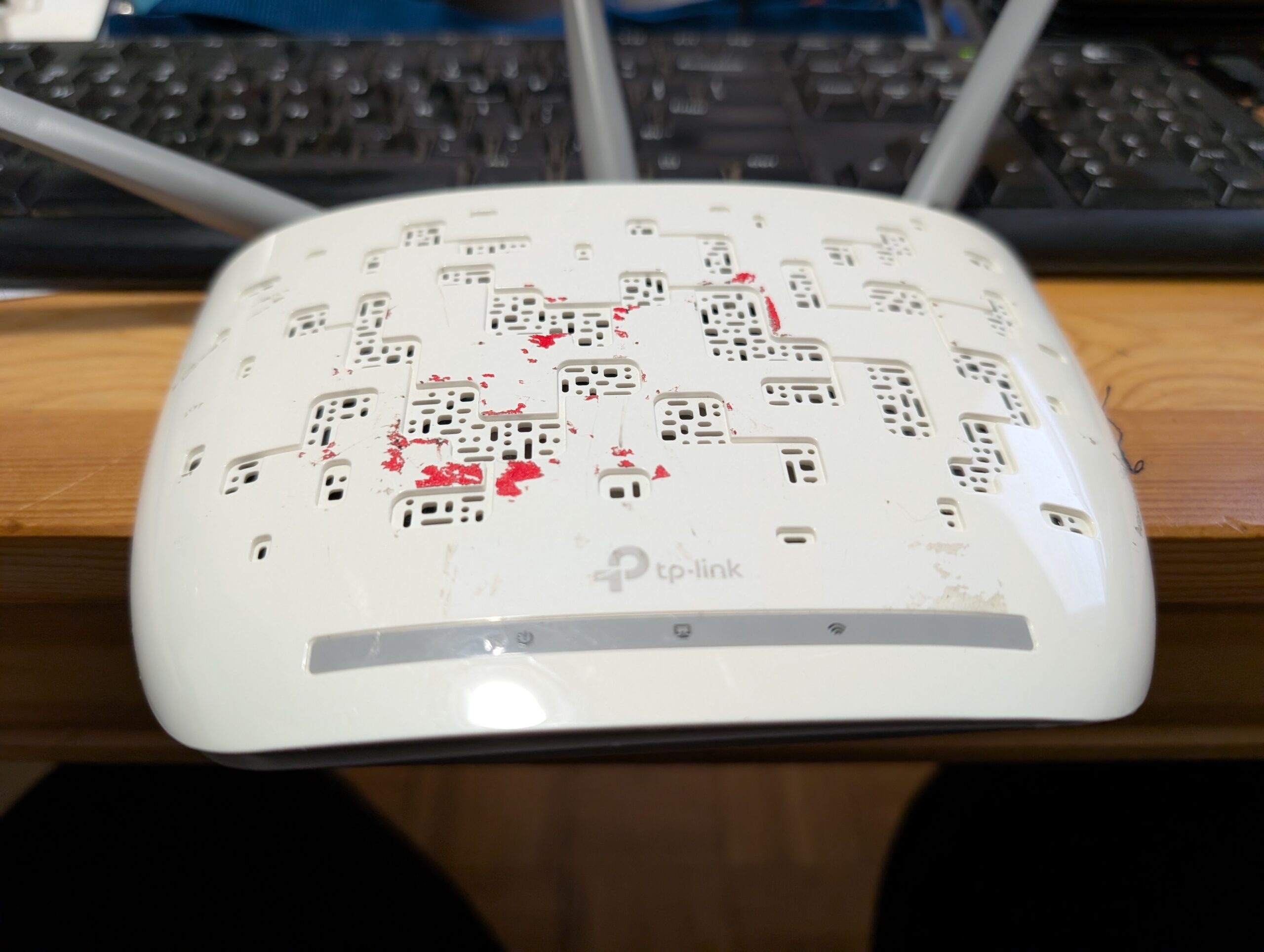
The power supply is nowhere to be found and I can’t seems to find any information on the net except 9v 0.85a. there is not a single website that talks about the polarity… Nor the manual… And I don’t want to gamble one way or another. (We don’t need another incident of the sort… I guess that’s wisdom?)
Nonetheless, my alternative is to figure out myself the polarity. That’s easier said than done from the previous experiments I did but I think this one is gonna go in my lucky day pile. 😀
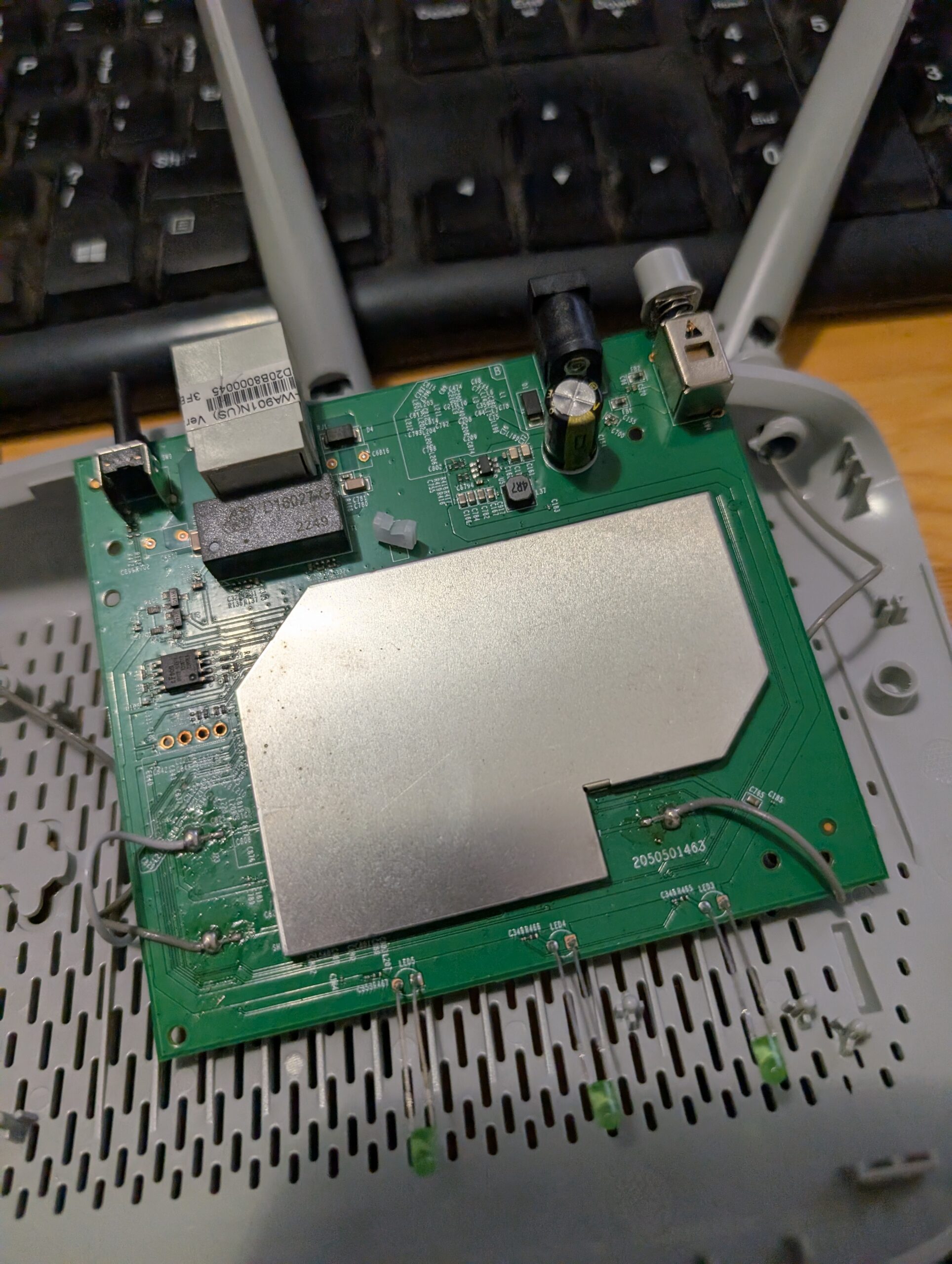
I initially started by trying to trace the barrel Jack pins on the board, try to figure out where the power is going after the switch. I had less than ideal results and I was legitimately wondering if I was going the right route until I realized something very important. The ground plane is usually shared by the metal shield and heat-sinks.
So right away, I poked the center shield with the multi-meter and poked at the jack, and within seconds, my multi-meter started beeping! Hurray! I found the common ground super easily!
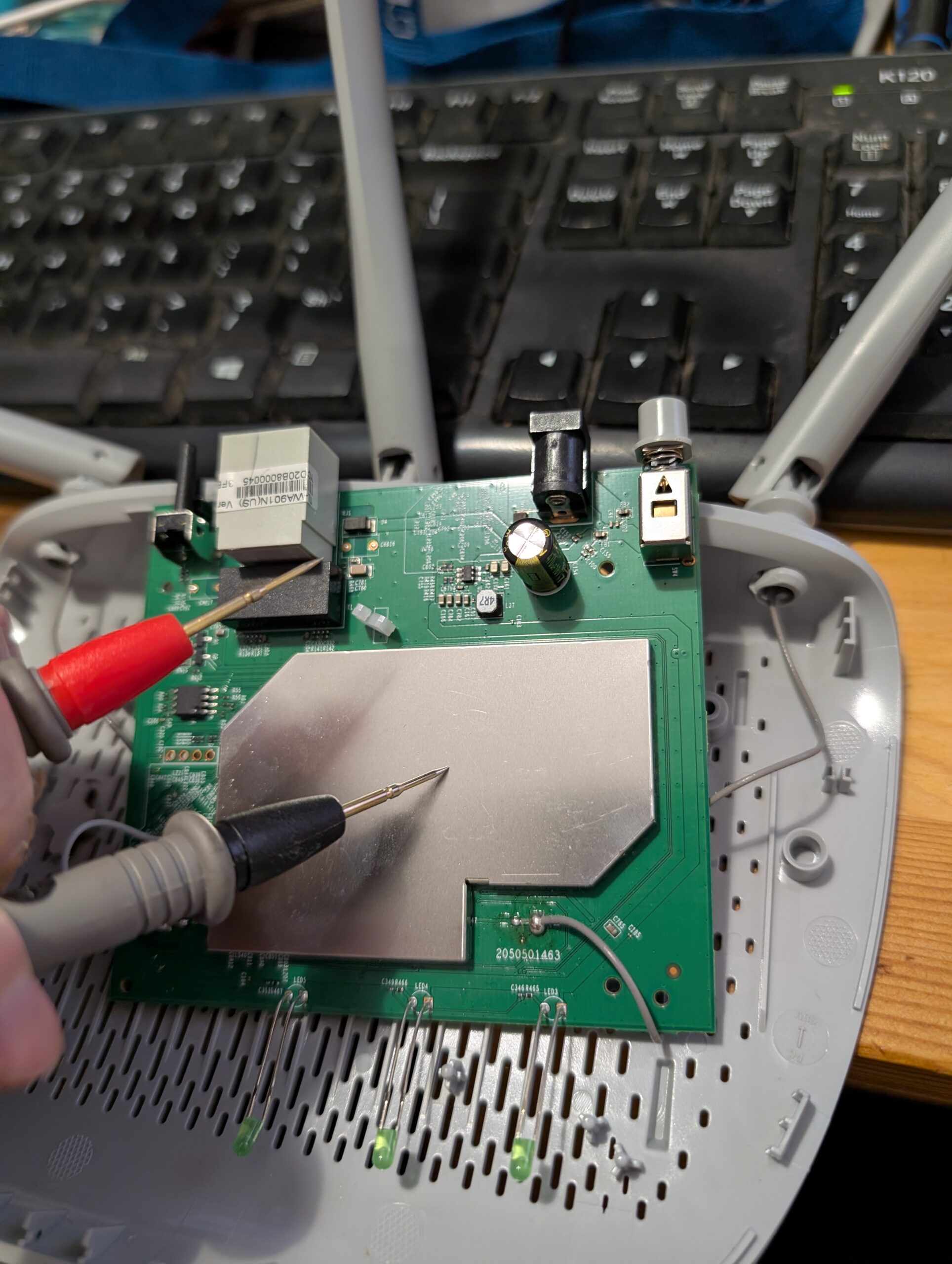
I am very happy that I recalled that little trick. I mean, it’s not always working but it’s definitely a tool in my toolbox that I should use more often when dealing with these situations.
So for those looking for that information, a TP-Link TL-WA901N(US) polarity is positive inside. You’re welcome.
Thanks for the read!
